
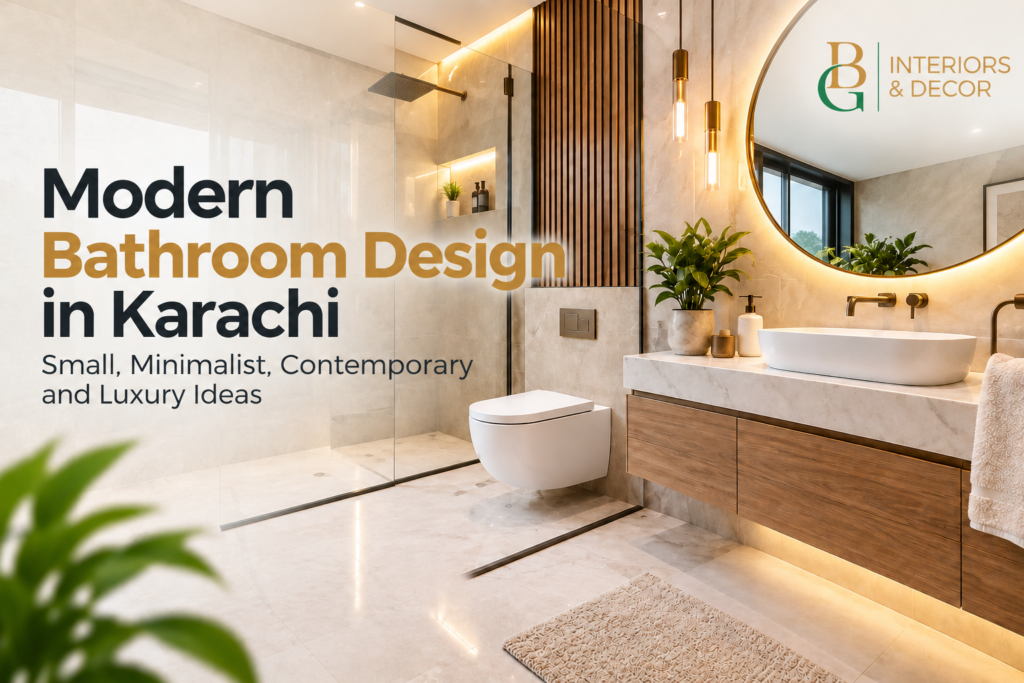
A modern bathroom in Karachi has to do two things at once: look current and calm, and survive a coastal climate of high humidity, hard water and variable water pressure. The designs that last are not the ones with the most features. They are the ones where tiles, waterproofing, ventilation, plumbing and lighting were planned together before any fixture was chosen.
Modern bathroom design in Karachi typically combines large-format, low-porosity tiles, a clear wet and dry zone, wall-hung or concealed fittings, layered lighting and dependable ventilation. Small bathrooms rely on light colours and frameless glass, minimalist ones on restraint and hidden storage, contemporary ones on mixed textures and warm metals, and luxury ones on premium surfaces, bespoke joinery and a considered shower experience.
What Modern Bathroom Design in Karachi
Modern, minimalist, contemporary and luxury are often used as if they were the same thing. They are related, but they solve different problems.
- Modern: Living Room Interior Design A Complete Guide To Creating A Stylish And Comfortable Space Home Interior Design Guide for Modern Luxury Homes Interior Decoration Ideas For Bedroom Complete Design Guideesign favours clean lines, simple geometry, limited ornament and practical layouts.
- Minimalist: Design is modern design taken further: fewer materials, fewer visible fixtures, almost no clutter.
- Contemporary: Design follows current trends, so it is more flexible and can mix textures, finishes and colour.
- Luxury: Is about quality of materials, craftsmanship, comfort and detailing, and it can be built in any of the styles above.
Choosing the direction first stops the project drifting into a mix of unrelated ideas halfway through.
Plan For Karachi Conditions Before Choosing a Style
Most bathroom failures are not design failures. They are planning failures. These local factors should shape the brief.
- Humidity and ventilation: Karachi’s coastal humidity keeps modern bathroom design in karachi damp for long periods. Without proper extraction or an openable window, grout darkens, paint peels and joinery swells. Plan ventilation as part of the design, not as an afterthought.
- Water supply and pressure: Many homes depend on overhead tanks, underground tanks and booster pumps. Rain showers and multi-jet systems need adequate pressure and flow, so confirm what your supply can actually deliver before specifying them.
- Hard water: Mineral deposits leave limescale on glass, chrome and dark finishes. Surfaces that wipe clean easily, and finishes that hide marks, save a lot of maintenance.
- Geysers and gas: If a gas geyser is part of the setup, its location and ventilation are a safety matter. Have it positioned and installed by a qualified plumber and keep it out of enclosed, unventilated spaces.
- Waterproofing: Floors and wet walls need a properly applied waterproofing system with adequate curing time before tiling. This is the layer you never see and the one you most regret skipping.
- Property type: A flat in Gulshan or North Nazimabad usually means a compact modern bathroom design in karachi with fixed plumbing stacks. A bungalow in DHA or Clifton often allows layout changes, larger wet areas and en-suite planning. The same style is executed differently in each.
Small Bathroom Design Making Limited Space Work
A small bathroom is a planning exercise. The goal is to remove visual weight and reclaim floor area.
- Wall-hung toilet with a concealed cistern: It frees the visible floor, makes cleaning easier and gives a tidier line. It needs a properly framed wall, so decide this early.
- Compact or slim-depth vanity: A shallow basin with a wall-mounted cabinet keeps circulation space open.
- Frameless glass shower screen: It separates wet and dry zones without cutting the room in two, and lets light travel through.
- Flush or low-profile shower floor: A continuous floor finish makes the room feel larger.
- Recessed niches instead of shelves: Built into the wall, they store products without adding visual clutter.
- Light, low-contrast palette: Soft neutrals, pale stone-effect or matt white tiles with matching grout reduce visual breaks.
- Large tiles, fewer joints: Fewer grout lines read as more space, and less grout means less to clean.
- Mirror cabinets and tall mirrors: They add storage and reflect light.
- Sliding or outward-opening doors: A door swinging into a tight space wastes a usable area.
Minimalist Bathroom Design Restraint Done Properly
Minimalism is easy to get wrong because it exposes every detail. With few elements on show, the quality of each one matters more.
- Work with one or two materials and a tight palette, such as warm white, greige and a single accent.
- Use concealed storage: handleless vanity drawers, mirror cabinets, wall niches.
- Choose concealed or wall-mounted fixtures and a clean linear shower drain.
- Keep fittings consistent in one finish across tap, shower and accessories.
- Add warmth through texture rather than decoration, for example a honed surface or a timber-look element, so the room does not feel cold.
In a humid city, minimalism also helps practically. Fewer surfaces and fewer decorative items mean less to clean and fewer places for moisture to settle.
Contemporary Bathroom Design Texture, Warmth and a Focal Point
Contemporary bathrooms are looser than minimalist ones and respond to current design thinking.
- Mixed textures: matt porcelain with a ribbed or fluted feature surface, or a smooth wall against a textured one.
- A single feature wall behind the vanity or in the shower, rather than decoration everywhere.
- Warm metals such as brushed brass or champagne tones, balanced with neutral surfaces.
- Wood-look porcelain or moisture-resistant joinery to soften stone and tile.
- A floating vanity with integrated lighting, so the cabinet becomes a design element.
- Colour used deliberately, such as deep green, sand or charcoal, usually limited to one surface.
Because contemporary design changes with trends, put the long-lasting elements (waterproofing, tiles, layout) in neutral materials and let the easily replaced items (mirrors, lighting, accessories) carry the fashionable detail.
Luxury Bathroom Design Where The Investment Goes
Luxury is not decoration. It is how the room feels and how well it is built.
- Surfaces: Natural marble and onyx look exceptional but are porous and can stain in hard-water conditions, so they need sealing and sensible maintenance. Large-format porcelain slabs offer a similar look with far lower upkeep.
- Shower experience: A rain shower with a separate handheld, thermostatic mixer and a generous, well-drained wet area. Check supply pressure first.
- Bespoke joinery: Custom vanities, stone tops and tall storage designed around your products and routine, built with moisture-resistant materials and sealed edges.
- Lighting layers: Soft ambient light, task lighting at the mirror, and a gentle accent light for the evening. Dimmable circuits make the room usable at any hour.
- Comfort details: Heated towel rails, a freestanding bath where the room genuinely allows it, a quiet extraction fan and a good mirror, whether backlit or smart.
- Privacy and flow: In a master suite, a well-planned layout separates the toilet, shower and vanity zones so the space feels private as well as beautiful.
Comparing the four styles
| Style | Best for | Key materials | Main watch-out |
| Small | Flats and compact bathrooms | Light large-format tiles, frameless glass | Over-fitting too many fixtures |
| Minimalist | Owners who prefer calm and low upkeep | One or two materials, concealed storage | Poor detailing shows immediately |
| Contemporary | Those who want warmth and a focal point | Mixed textures, warm metals, wood-look finishes | Chasing trends in permanent surfaces |
| Luxury | Master suites and bungalows | Porcelain slab or sealed stone, bespoke joinery | Specifying beyond water pressure and maintenance reality |
Materials That Suit Karachi Bathrooms
- Floor tiles: choose slip-resistant, low-porosity porcelain for wet areas.
- Wall tiles and slabs: large formats reduce grout lines and cleaning effort.
- Vanity and cabinetry: moisture-resistant boards with sealed edges, solid surface or stone tops. Avoid unprotected standard MDF near water.
- Fittings: brushed finishes tend to hide limescale marks better than polished black or mirror chrome.
- Glass: toughened glass with quality hinges and seals; consider a protective coating to ease cleaning.
- Grout: a good-quality, stain-resistant grout in a tone close to the tile.
Lighting the Part Most People Underplan
A single ceiling light flatters nobody. Use three layers: ambient (recessed or surface-mounted), task (at or beside the mirror to avoid shadows on the face) and accent (under-vanity or niche lighting). Use fittings rated for bathroom zones and have them installed by a qualified electrician. Warm white light, often around 3000K, tends to suit most modern bathroom design in karachi, with a slightly neutral tone at the mirror for accuracy.
How a Bathroom Renovation Usually Runs
- Brief and measurements: decide style, storage, fixtures and who will use the room.
- Layout and plumbing plan: positions for the toilet, shower, drains, supply lines and extraction.
- Demolition and rough-in: removal, plumbing and electrical first fix.
- Waterproofing and curing: applied and allowed to cure properly.
- Tiling and joinery: surfaces, vanity and glass.
- Fixtures, lighting and finishing: final installation and snagging.
Timelines and costs depend on size, materials, layout changes and fixture quality, so ask for a written scope and quotation rather than relying on general figures.
Common Mistakes To Avoid
- Choosing fixtures before confirming plumbing positions and water pressure.
- Skipping or rushing waterproofing and curing.
- Leaving ventilation out of the plan.
- Using highly polished dark surfaces without considering limescale.
- Fitting a freestanding bath or double vanity into a room that cannot carry it.
- Treating the mirror and lighting as last-minute purchases.
Planning Your Bathroom With a Designer
A good designer links the style, the plumbing, the waterproofing, the joinery and the lighting into one plan, which prevents costly changes later. If you are planning a modern bathroom design in karachi in Karachi, BG Interiors & Decor can help you define the style, develop the layout and coordinate materials and finishes so the finished room works as well as it looks. If the bathroom is part of a wider renovation, the same plan can carry through to kitchen interiors and bedroom interior design.