
Living Room Interior Design A Complete Guide To Creating A Stylish And Comfortable Space
Your living room is the heart of your home. It’s where families gather, guests are welcomed, and everyday life unfolds. Getting the design right matters more than most people realize.
Living room interior design isn’t just about picking a nice sofa or a trendy color. It’s about creating a space that balances comfort, function, and style in a way that reflects how you actually live.
In this guide, you’ll learn what living room interior design really means, the essential elements that shape a great space, popular design styles to consider, and practical tips to elevate your modern living room design starting today.
What Is Living Room Interior Design?
Living room interior design is the thoughtful planning and arrangement of furniture, colors, lighting, and décor to create a space that is both visually appealing and highly functional.
It goes beyond decoration. Good design considers how people move through the room, how furniture supports daily activities, and how light and color affect mood.
Space planning plays a central role here. Every choice, from where the sofa sits to how much walking room exists between pieces, contributes to whether a living room feels open and inviting or cramped and chaotic. The best designs balance aesthetics with everyday practicality.
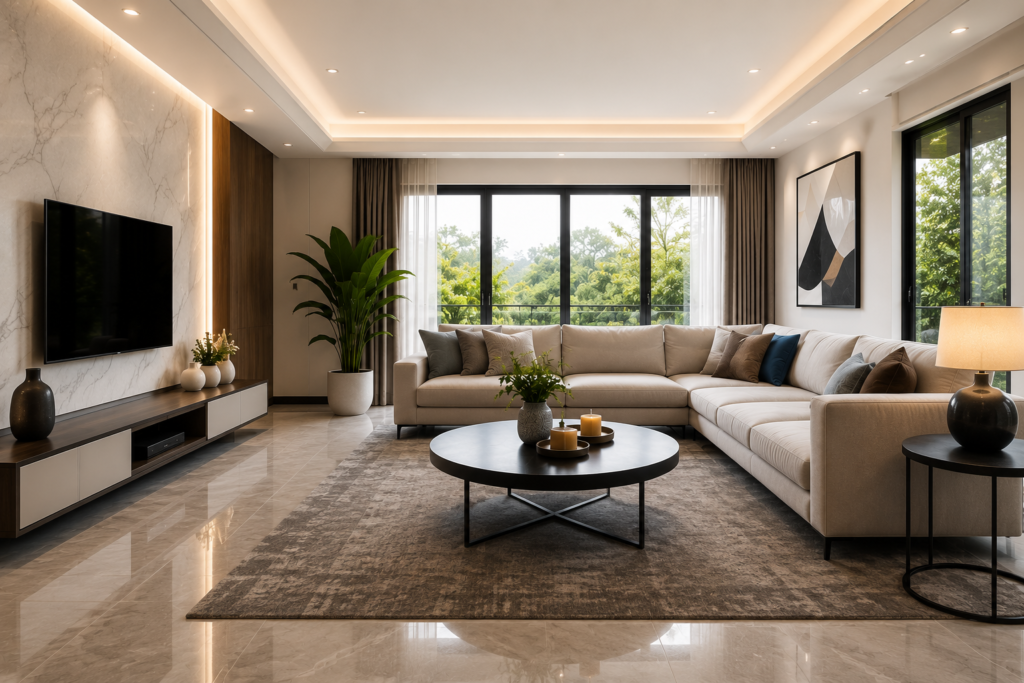
Essential Elements of Living Room Interior Design
A well-designed living room comes together through several interconnected elements. Each one plays a distinct role in shaping the overall feel of the space.
- Furniture Selection: Furniture forms the foundation of any living room. A comfortable sofa, a sturdy coffee table, and a well-placed TV unit anchor the room’s function. Choose pieces that match your room’s scale. Oversized furniture in a small living room design can make the space feel cluttered, while too-small pieces can leave a large room feeling empty.
- Color Palette: Your color palette sets the emotional tone of the room. Neutral tones like beige, grey, and white create a calm, versatile backdrop, while bold accent colors add personality and depth.
- Lighting: Natural lighting should always come first, but layered lighting, think chandeliers, floor lamps, and accent lights, adds warmth and dimension after dark.
- Flooring & Wall Décor: Flooring choices, from hardwood to plush rugs, ground the room visually. Wall art and mirrors add character while making spaces feel larger and more dynamic.
- Layout & Space Planning: Thoughtful layout ensures smooth traffic flow and conversation-friendly seating arrangements, which is often the most overlooked yet most important design factor.
Popular Living Room Interior Design Styles
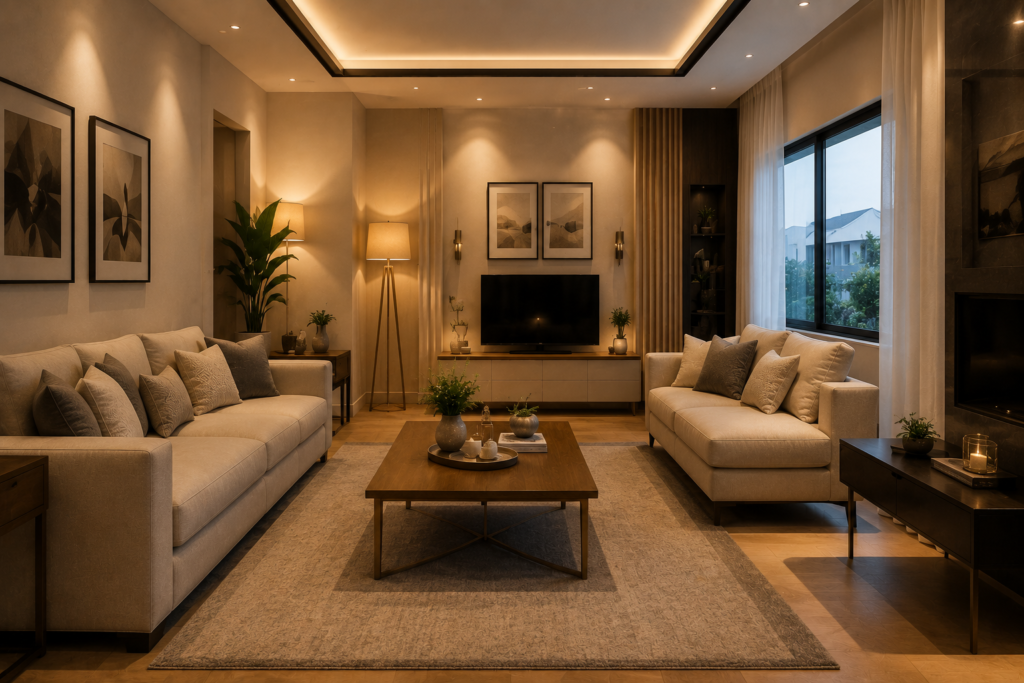
Choosing a style helps unify your design decisions. Here are some of the most popular approaches today. Modern designs favor clean lines, minimal ornamentation, and a neutral color palette paired with occasional bold accents.
Minimalism strips away excess, focusing on function and negative space to create a calm, uncluttered environment. Scandinavian design blends minimalism with warmth, using light wood tones, cozy textiles, and soft natural lighting.
Contemporary living room styles evolve with current trends, often mixing textures, materials, and shapes for an eclectic yet cohesive look. Luxury living room interiors emphasize rich materials, statement lighting, and refined furniture to create an elevated, upscale atmosphere.
Each style can be adapted to fit different home sizes and personal preferences, making it easier to find an approach that suits your lifestyle.
Tips to Improve Your Modern Living Room Design
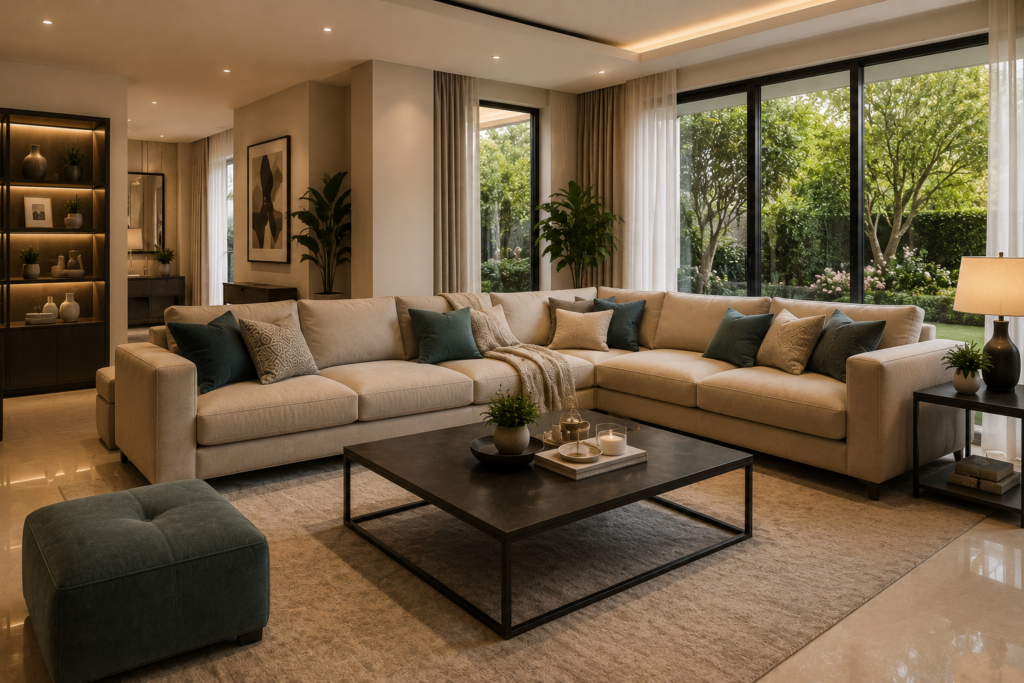
Small changes can make a noticeable difference in how your living room looks and feels. Consider these practical tips:
- Maximize natural light by keeping windows unobstructed and using sheer curtains.
- Add indoor plants to bring life, texture, and improved air quality into the space.
- Choose the right rug to anchor your seating area and define the layout.
- Reduce clutter by keeping surfaces clear and storage functional.
- Use mirrors to reflect light and create the illusion of a larger room.
- Layer your lighting with ambient, task, and accent sources for depth.
- Invest in functional furniture that offers storage or multi-purpose use without sacrificing style.
These small, intentional upgrades often deliver a bigger visual impact than a complete renovation.
How All These Interior Design Concepts Work Together
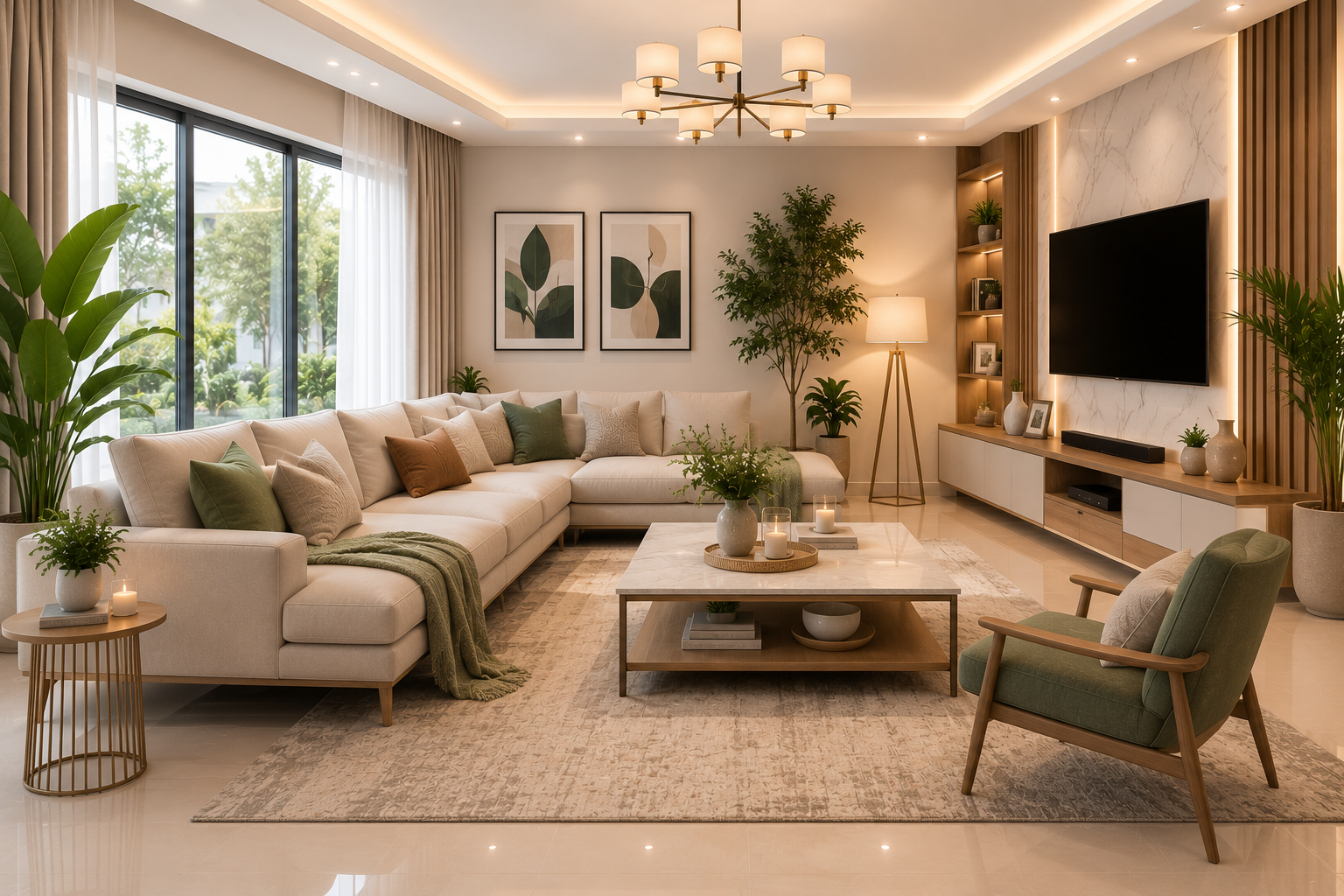
All modern interior design concepts whether luxury home interiors, bespoke planning, or upscale styling—work as a connected system rather than separate ideas. Each concept supports the other to create a complete, functional, and visually cohesive living experience. When combined properly, they form a strong design ecosystem that defines true premium living. At the foundation, bespoke spatial planning and refined architectural interiors set the structure of the home. This determines how spaces flow, how rooms interact, and how comfort is balanced with usability. Without this base, even the most luxurious finishes cannot achieve harmony or functionality.
Once the structure is defined, premium material selection and luxury residential architecture enhance the physical identity of the space. High-quality materials, thoughtful textures, and durable finishes establish long-term value while reinforcing elegance. This is where craftsmanship and design precision come together. Next, curated interior atmosphere and designer styling elements bring personality into the space. Through layering of decor, lighting, and furniture, interiors develop emotional depth and visual richness. This stage connects aesthetics with lifestyle, ensuring the home feels both luxurious and lived-in.
Finally, concepts like elite residential character, bespoke furniture integration, and tailored living aesthetics unify everything into one consistent design language. They ensure that every room feels connected, intentional, and aligned with the homeowner’s identity.
Final Thoughts on Living Room Interior Design
Living room interior design blends function and beauty into one cohesive space. From furniture selection and color palette to lighting and layout, every element plays a role in shaping how your room looks and feels.
Whether you prefer modern, minimalist, or luxury interiors, thoughtful planning makes all the difference. Start small, stay consistent with your style, and let your living room reflect the way you truly want to live.
FAQs Living Room Interior Design
It’s the process of planning and arranging furniture, color, lighting, and décor in a living room to create a space that’s both functional and visually appealing, tailored to how residents actually use the room.
Start by defining your style and budget, then plan your layout around traffic flow. Choose furniture that fits the scale of your room, add a cohesive color palette, and layer lighting for both function and ambiance.
Luxury comes from quality materials, statement lighting, curated décor, and a cohesive color scheme. Rich textures, well-proportioned furniture, and thoughtful styling all contribute to an upscale, polished appearance.
Neutral tones like beige, grey, and soft white work well as versatile bases. The “best” color ultimately depends on room size, natural light, and personal preference, since warm tones cozy up spaces while cool tones feel more open.
Use multi-functional furniture, light color palettes, and mirrors to create the illusion of space. Avoid oversized pieces, keep clutter minimal, and prioritize vertical storage to maximize your available floor area.
Essentials include a sofa, coffee table, TV unit or media console, and at least one accent chair. Adequate storage and appropriate lighting fixtures round out a functional, comfortable living room setup.
Current trends favor natural materials, curved furniture silhouettes, warm neutral palettes, and biophilic elements like indoor plants. Statement lighting and mixed-texture layering are also gaining popularity in contemporary interiors.
Costs vary widely based on scope, ranging from a few hundred dollars for DIY styling to several thousand for full-service professional design, including furniture, décor, and contractor fees for structural changes.